
Proper Humility Against Conceit
Beloved warrior in Christ, let us now confront the most dangerous enemy of all: our own damnable arrogance, that one of three aspects of materiality entitled Conceit in Structural Virtues Theory (SVT). This sin, more than any other, threatens to shatter the fragile bridge between man and God. In SVT, arrogance is described as the “predictable” shape of modern Christianity, a false form of piety that mistakes self-importance and rank within church hierarchies for spiritual maturity. It is the sin that disguises itself as confidence, but in truth, it is a cloak for pride, a refusal to acknowledge our own limitations and God’s greater power.
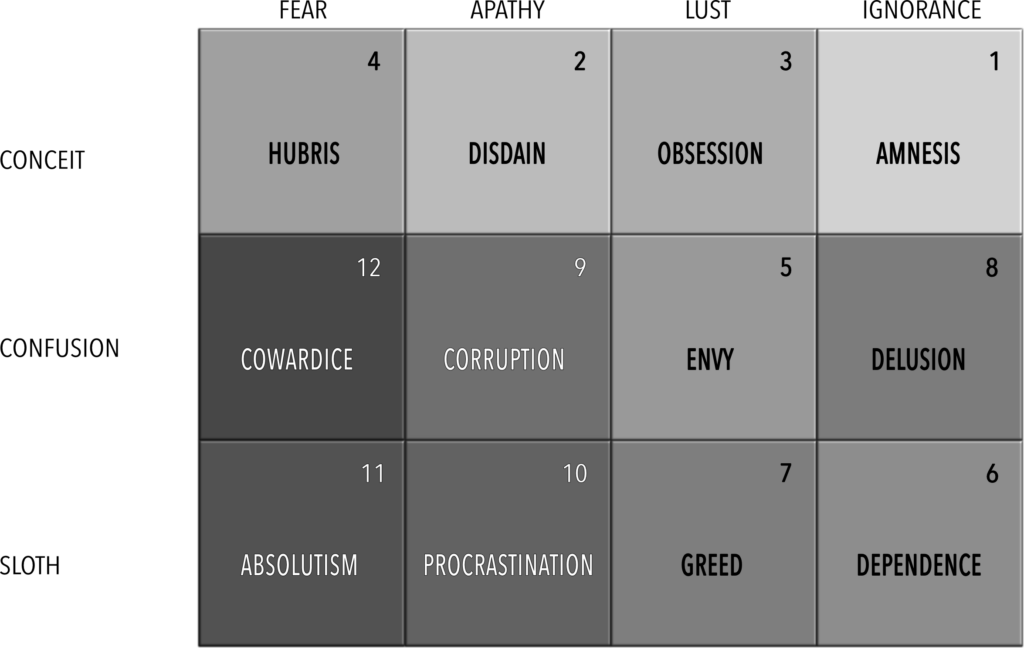
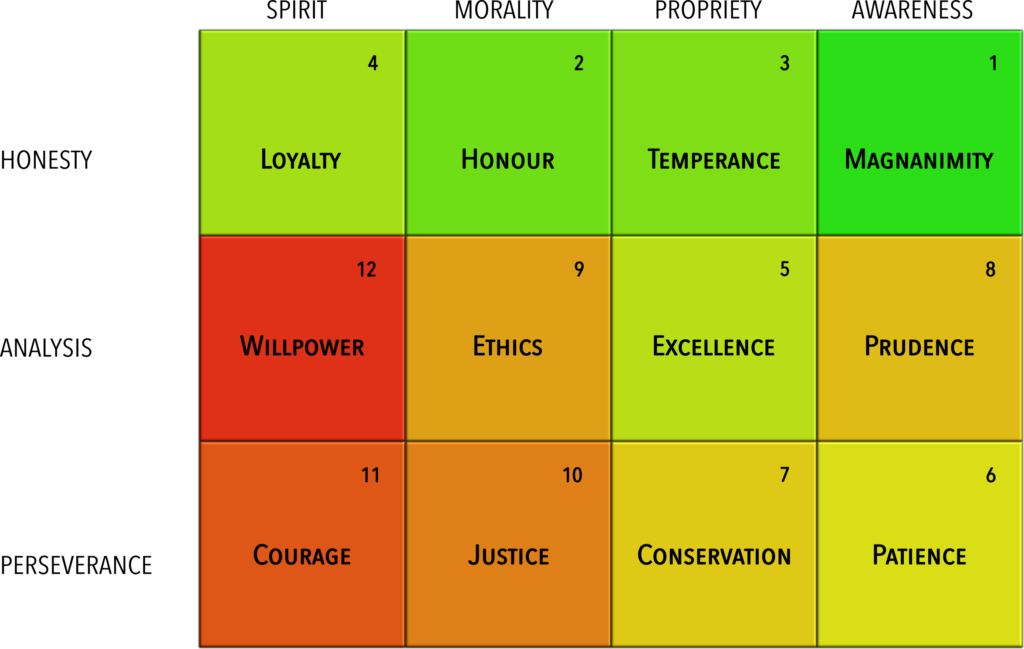
Conceit, as opposite the virtues aspect of Honesty, precedes envy, as the primary diversion from the path of virtues for the majority of people. It is the soul’s rebellion against humility, the very quality that should be its foundation. In SVT, Magnanimity, the first virtue setting us upon the path serves as the antidote to this deadly sin and the entrance into Honesty through Awareness. Though Magnanimity means “greatly spirited,” it is no self-aggrandisement. This is recognition of our identity within position and our highest calling being to serve others rather than try to dominate them.
The Greatest Value
I must again paraphrase our Paulus in that we must do not one thing from selfish ambition or in conceit, but in humility as counting others more significant than ourselves (Philippians 2:3-4). Essentially, he exhorts us to truly live, which is to always have in our hearts the unshakeable conviction that our greatest value is in God’s Love, and therefore too our loyalty and love back to God. Humility, as defined by SVT, is the natural response to this Loyalty, we recognise that our lives are not our own but entrusted and devoted to a much higher purpose before we were born but denied by us in our sin and error. We are the very vessels of His divine love, called to reflect His glory through acts of service and compassion.
Conceit is rooted in the belief that we are above others, that our station in life is greater than it truly is. However this is always an illusion driven by material desires, a delusion born from a failure to see ourselves as we are: creatures made in God’s image, fallible and finite as only improved long enough to do some good. We forgot, which is the most externalised sin, and the first antagonist to be overcome. If we do not fight this sin, the path toward Honesty and the greater virtues will be forever blocked, as lost in deepening internalising layers. To combat it, we cultivate a total honesty with ourselves, a willingness to acknowledge our weaknesses without shame, and a deep trust that God’s plan for us is perfect if we allow it to be and appreciate its purpose.
The soldier in Christ must therefore embrace humility as both a reality and the sharpness upon the blade’s edge of the most powerful virtue: Willpower, identical with Truth in God’s Will. Humility as the reality of human existence is often seen as a virtue itself, but is throughout the twelve virtues, sprinkled. Humility is in our grasp of Truth. It is acceptance of self as God’s child. It is the air that fills the lungs fighting the smog of sins, and sun rising up and dispersing the fog of pride. This is the very nature of God’s love, a love that does not seek to elevate itself above others but to uplift and be of greater service. To grasp our rightful humility is to walk the path of true discipleship, where our greatest joy lies not in our own success but in seeing others find their way to Christ however we can. We have to pack that narrow gate.